A future where intelligence belongs to everyone — not to three companies and a handful of governments. A one-day gathering on the coast of Costa Rica.
We are gathering 100 people on a remote beach in Costa Rica to experience something they need to feel, not just hear about: intelligence that belongs to them. No cloud. No corporation. No government. No filter. Fully local, fully private, fully open.

Nosara. Howler monkeys at dawn. Iguanas on the rocks. Sea turtles nesting on Playa Ostional. No cell towers for miles. The kind of place where the internet feels like a memory — which is exactly why it's the right place to talk about what intelligence looks like when it lives on your device, not in a data center.
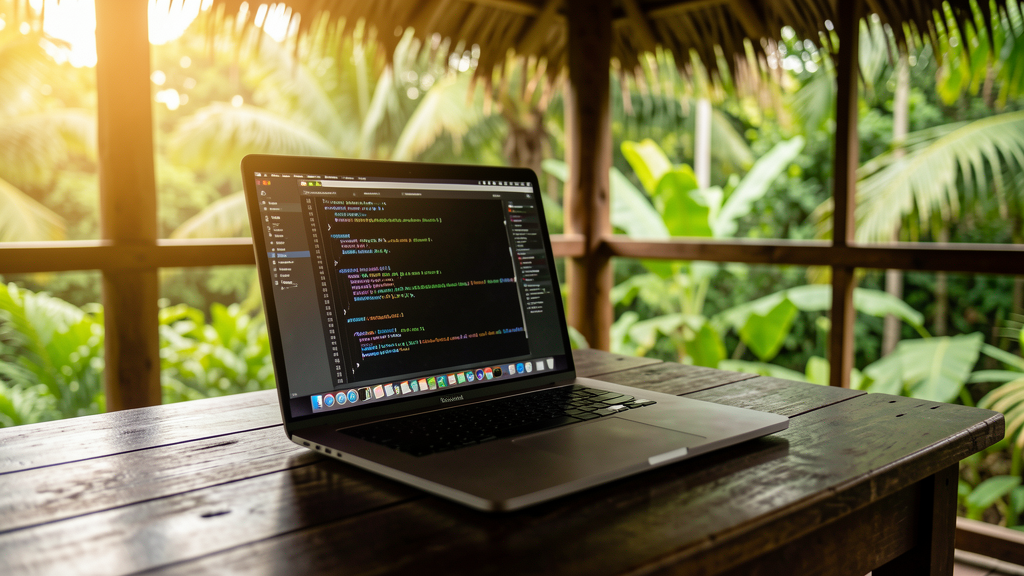
On each desk: a MacBook Pro running a fully local, agentic AI. Frontier-class open-weight models. Tool calling. Code execution. Document analysis. Encrypted internet when needed. Zero telemetry. Nothing leaves the machine unless they choose to send it. This is the experience we want them to have — and the future we want them to protect.
"Intelligence is the most powerful tool humanity has ever built. Whether it belongs to everyone or to a few will determine the shape of the next century."
"The moment someone experiences genuinely private, capable, uncensored intelligence on their own device — intelligence that belongs to them — the strategic argument makes itself."
A morning of experience. An afternoon of workshops. An evening of conviction.
Remote lodge. Nosara. Each person finds a MacBook Pro with a fully local AI environment already installed. A welcome message. Nothing else. No slides. No presentation. They start using it.
Each participant does a task they'd normally use ChatGPT or Claude for: analyze a confidential document, draft a memo, summarize research. Entirely local. After 20 minutes, the network dashboard is revealed: zero bytes transmitted. Nothing left the room.
Switch to an uncensored model. A model with no corporate guardrails. Participants type questions they'd be afraid to put into ChatGPT — political, controversial, personal. The model answers. Fully. On their machine. No log. No subpoena. This is the gut-punch moment.
A table of $50 Android phones. No SIM. No internet. Each running a capable AI model offline. Translation. Tutoring. Document analysis. Participants pick one up and realize: this intelligence fits in a pocket, costs nothing, and works anywhere on earth.
No tech. No moderators. Conversation only. Let them process what they just felt.
Everyone together. The question that turns the day from experience to action.
Five areas where this future needs protection. Participants self-select into the group that resonates. Each group has a facilitator, a whiteboard, and a mandate: produce a concrete action plan by 4:30 PM.
Each group presents their action plan to the full assembly. 10 minutes each. Concrete, specific, with named commitments.
Each participant receives a single sheet of paper. Five lines. They fill it out privately. They keep it. No one collects it. The commitment is to themselves — and to the future they just experienced.
Under the stars. No tech on the table. Just conversation, conviction, and the sound of the Pacific. Before leaving, each person takes home a USB drive with the full open-weight stack, the $50 phone they used, and a list of who needs funding.
"Once they feel it, they won't want to be stopped."
Each group produces a concrete action plan with specific commitments by 4:30 PM. Not a pledge conference — a working session.
The brain. Multiple, independent, uncensorable.
Ensure there are always multiple, independent, frontier-class open-weight models competitive with the best closed models. Today, Meta (Llama), DeepSeek, Qwen, and GLM are the main players. That's too few, and each is vulnerable to political pressure.
The interface between human and machine.
The agentic layer — tool calling, file access, code execution, web research, memory. This is where lock-in happens. If everyone uses OpenAI's agent, OpenAI controls what tools are available, what data is logged, and what the agent will refuse to do. The harness must be open.
ChatGPT-simple. Works on a $50 phone.
The open-weight community builds great tools for engineers and terrible tools for everyone else. ChatGPT has 200M users because it's one click. We need the same friction: download app → model loads → chat. And it needs to reach people in Iran, Myanmar, and Venezuela.
The cheapest phone on earth should run AI.
A $50 phone in rural Kenya has 1–2GB RAM and no NPU. The model they just used won't run on that phone. The 1B–3B parameter model is the key to universal access. Billions of phones have NPUs that aren't used. The hardware gap is the real bottleneck.
Keep open weights legal. Counter the narrative.
Closed labs are lobbying to define open weights as "dangerous." The EU AI Act, US executive orders, and UN discussions all threaten to restrict open AI in the next 36 months. Open weights are the difference between AI as a public utility and AI as a private utility.
Not a pledge to an organization. A promise to yourself, written on paper, in a room where you felt what open intelligence means.
The full open-weight software stack — models, harness, tools — to replicate the experience on their own machine.
The $50 Android phone they used. Offline AI. Theirs to keep. Take it home. Show your family.
Specific organizations, projects, and engineers who need funding. With contact info and project descriptions.
Key papers, key people, key organizations. Enough to go deep without being overwhelmed.
The gathering is the spark. The next 36 months are the fire.
Personal adoption. Follow up individually. The 90-day organizational evaluation begins. Spring 2027 is when EU AI Act enforcement and US congressional AI legislation are most active — participants' voices matter most right now.
Infrastructure stands up. The working groups turn plans into action.
Scale. Second-generation models. Apps at scale. Distribution networks proven in authoritarian countries.
Anyone in any country can install a capable, uncensored AI on their phone or laptop for free, and no government or corporation can stop it.
Intelligence is the most powerful tool humanity has ever built. Whether it belongs to everyone or to a few will determine the shape of the next century. This gathering is where that question gets answered — not with a presentation, but with an experience.